SL, Liberia Launch Joint Strike on Multinational Tax Evasion
Sierra Leone and Liberia have signed a landmark tax cooperation pact aimed at closing cross border loopholes exploited by multinational companies and wealthy individuals, marking one of the region’s strongest joint actions yet against revenue leakages that cost governments billions each year.
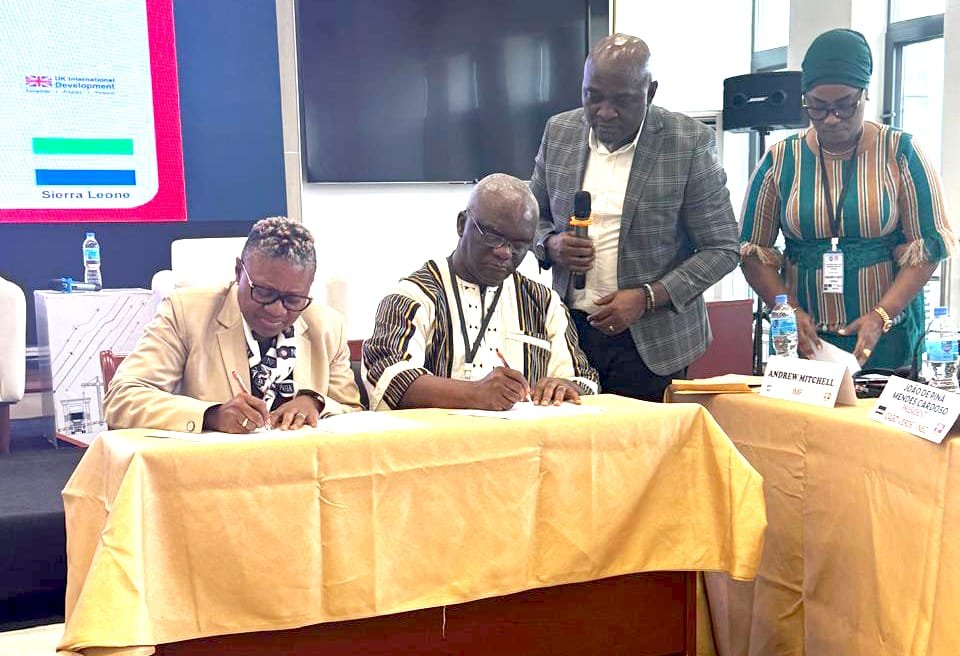
The two countries executed a Memorandum of Understanding on Simultaneous Tax Examinations (STE) in Freetown, signed by Liberia Revenue Authority Commissioner General James Jallah and Sierra Leone’s National Revenue Authority Commissioner General Jeneba Bangura. The agreement was concluded on the margins of the 13th IMF AFRITAC West 2 Steering Committee Meeting, where regional finance leaders gathered to discuss fiscal stability and domestic revenue mobilisation.
Jallah described the pact as “an important milestone in regional tax cooperation and a practical mechanism for strengthening domestic revenue mobilization,” noting that deeper economic integration in West Africa demands stronger coordination among tax authorities to tackle cross border tax risks.
Bangura said the move reflects a shared urgency to protect national tax bases, calling the agreement “a demonstration of the shared commitment of Liberia and Sierra Leone to strengthening tax compliance.”
Under the new arrangement, both tax administrations will conduct simultaneous audits of companies and individuals with operations or taxable interests in both jurisdictions. The coordinated examinations are designed to expose transfer pricing abuses, undeclared business activities, illicit financial flows and unreported income—issues that often escape detection when countries audit separately.
The MoU is anchored in the ECOWAS Supplementary Act on Mutual Administrative Assistance in Tax Matters, giving it a legal framework for mandatory information exchange, joint risk assessments and administrative cooperation. According to the agreement, the mechanism will improve the determination of correct tax liabilities, enhance the effectiveness of cross border audits, and reduce compliance costs for both taxpayers and tax authorities.
A key feature is a built in safeguard against double taxation, a frequent concern for companies operating across Mano River Union borders. By coordinating audits and resolving disputes early, the pact aims to create a more predictable and business friendly tax environment, rather than simply intensifying enforcement. Information shared under the agreement will be protected by ECOWAS legal instruments and national confidentiality laws.
The first wave of simultaneous examinations will focus on mining, agriculture and telecommunications, sectors where inter company transactions and profit shifting risks are highest. Both agencies have already identified high risk cross border transactions and complex international tax arrangements as priority targets.