Fiscal Deficit Deepens as Pressure Mounts on Public Finances
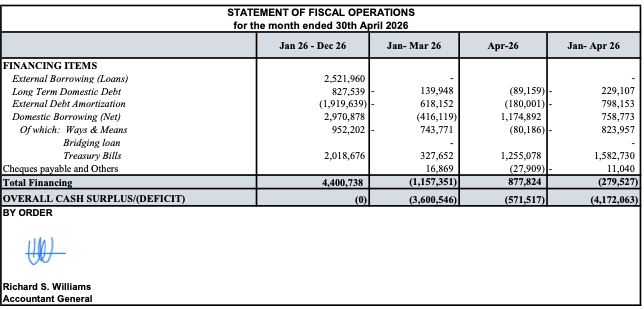
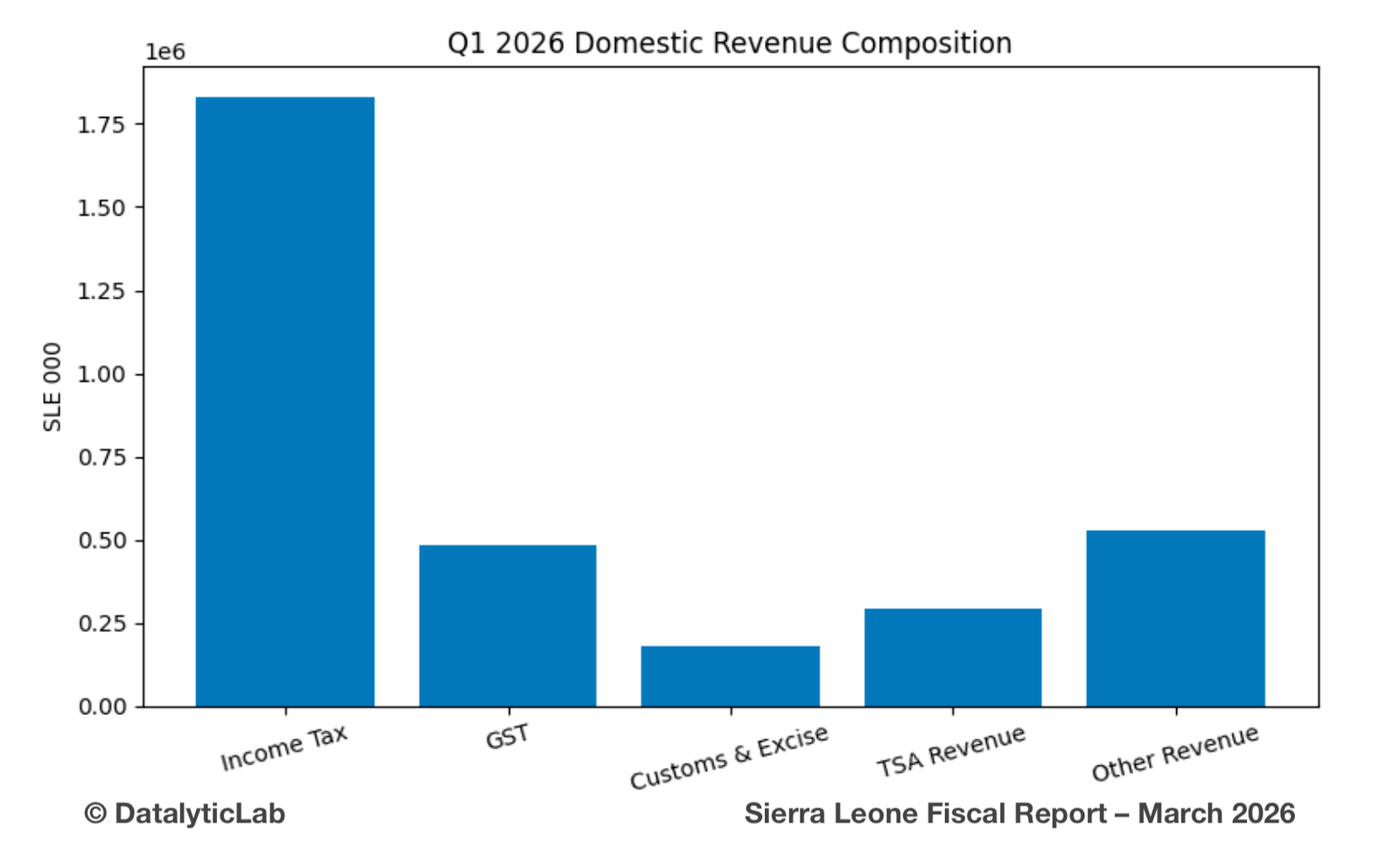
Sierra Leone’s fiscal position deteriorated further in April 2026, with new figures from the Ministry of Finance confirming that expenditure continued to outstrip revenue by a wide margin. Total revenue and grants reached NLe 6.20 billion, but operating expenses climbed to NLe 10.09 billion, widening the cash deficit to roughly NLe 3.89 billion.
Financing data illustrates how the government absorbed the shortfall. Net domestic borrowing amounted to NLe 758.77 million, while Treasury Bills provided an additional NLe 1.58 billion, underscoring the growing dependence on short‑term domestic instruments. Ways and Means financing contributed NLe 823.96 million, signalling continued reliance on central‑bank liquidity support. Despite these inflows, repayment obligations remained significant. External debt amortization reached NLe 798.15 million, surpassing long‑term domestic debt mobilization of NLe 229.11 million. The imbalance suggests that even as financing needs intensified, the government was still required to meet substantial external repayment schedules.
By the end of April, the overall cash balance showed a deficit exceeding NLe 4.17 billion, indicating that available financing remained insufficient to fully cover expenditure execution and debt service. Compared with first‑quarter trends, April did not ease fiscal pressures — it amplified them. Analysts warn that the financing mix is tilting increasingly toward short‑term domestic borrowing. While this may help manage immediate liquidity constraints, it heightens rollover risks and exposes the government to rising interest‑rate pressures over time.